

Guide to dangerous goods
PLEASE NOTE: The material contained in this guidance is provided for information only and does not constitute any legal or other compliance advice from TikTok. You are responsible for ensuring that any items you sell or supply on TikTok Shop comply with all applicable laws and regulations. We accept no responsibility or liability to you or anyone else in relation to the adequacy, accuracy or completeness of the information contained in this guidance, or your reliance on such information. We recommend you seek independent legal advice if you have any queries in relation to your compliance obligations.
What are dangerous goods ?
Dangerous goods (also referred to as hazmat or hazardous materials) are materials that pose a potential risk to people, property, or the environment, especially during transport, storage, or handling.Dangerous goods may be flammable, toxic, corrosive, or environmentally harmful. We often think of products such as explosives, petrol, or industrial chemicals. However, everyday products such as aerosols, paint, and lithium batteries can be classified as dangerous goods when transported in large quantities.
Since dangerous goods are necessary for modern industry, strict regulations are necessary to minimise the risk of safety incidents during handling, storage, and transportation.
What are the requirements for selling dangerous goods ?
Any seller of any dangerous good must classify them correctly to ensure that they are packaged, labelled, and transported in accordance with international regulations.The United Nations (UN) Model Regulations provide a global system that classifies dangerous goods based on the type of hazard they present and, where applicable, their level of danger (Packing Group I, II, or III).
This classification determines how the goods must be packaged, labelled, and transported so that the risks are understood and managed throughout the supply chain.
Those selling or shipping dangerous goods must also ensure that relevant staff, drivers, and safety advisors are properly trained and qualified.
📍See our guidance on how to list dangerous goods on TikTok Shop.
UN dangerous goods classification
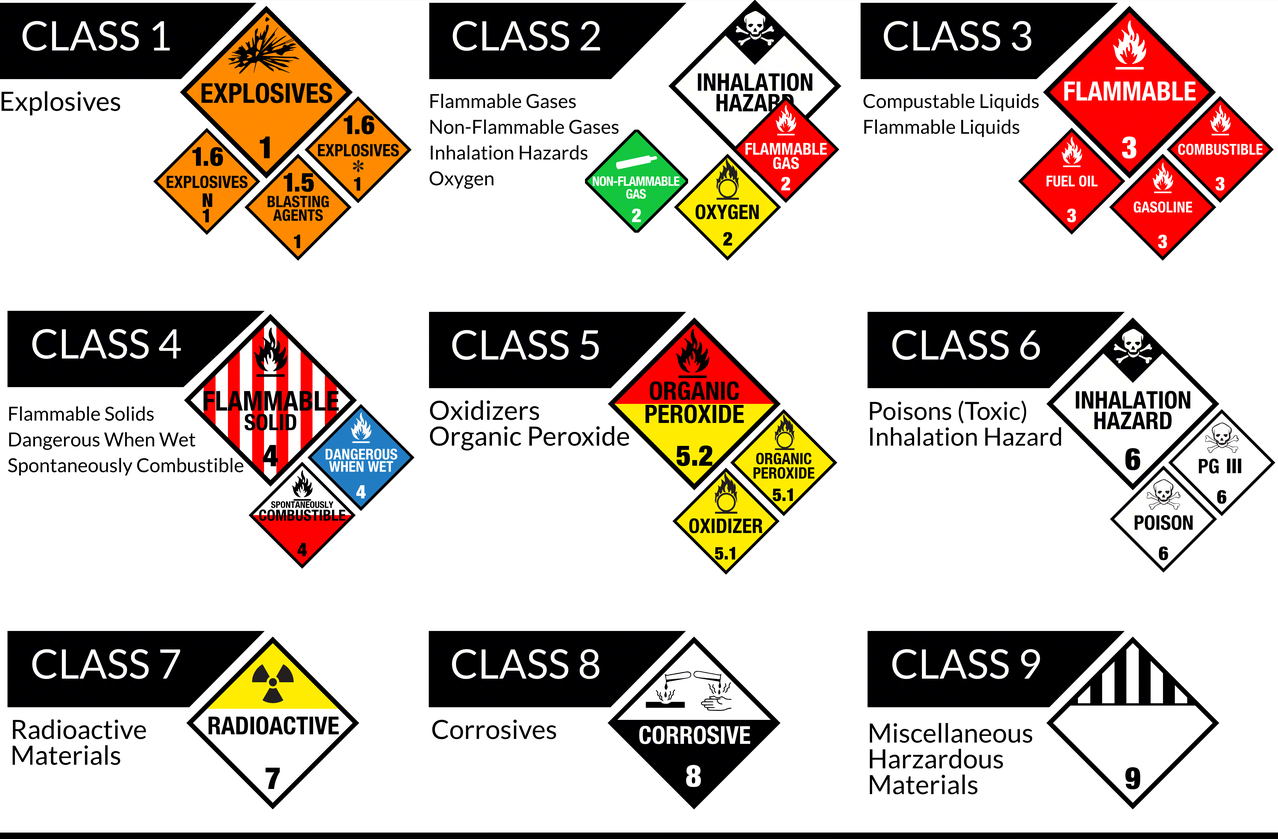
The table below shows the United Nations' (UN) dangerous goods nine classes, the various sub divisions and relevant packing groups and transport labels.- The class tells you the type of hazard.
- The division gives a more specific category within that class.
- THE packing group shows the severity of the risk, which determines packaging and transport requirements.
- PG I = high danger
- PG II = Medium danger
- PG III = Low danger
Regulation and standards
- International Civil Aviation Organization (ICAO)
- International Air Transport Association’s Dangerous Goods Regulations (IATA DGR)
- International Maritime Dangerous Goods (IMDG Code)
- International Carriage of Dangerous Goods by Inland Waterways, (ADN)
- International Carriage of Dangerous Goods by Road (ADR)
- International Carriage of Dangerous Goods by Rail (RID)
- European Union Classification, Labelling and Packaging (CLP)