

Artificial Intelligence Generated Content (AIGC)
As a creator, you must ensure all e-commerce content posted on TikTok Shop comply with TikTok Shop Platform Policies and Community Guidelines.Note: The content below is for guidance only. TikTok Shop reserves the right to enforce any content it considers to be inappropriate for any reason. ⏱️ Reading Time: 4-5 mins
🎥 In this video, our TikTok Shop expert explains how to avoid violations related to Artificial Intelligence Generated Content (AIGC)
⚠️ This video is for educational purposes only. Additional policy reviews may also apply to your promotional videos.
What is AIGC?
Artificial Intelligence Generated Content (AIGC) refers to content created wholly or partially by AI tools (e.g. scripts, voices, avatars, images, animations), with minimal or no direct human performance.These systems can assist or even replace manual content creation by generating text, images, videos, and animations from user inputs such as keywords or descriptions.
Why Do We Have this Policy?
- To protect the integrity of our platform and ensure our content remains trustworthy, professional , entertaining, structured and informative.
- To prevent the spread of manipulated content that could mislead users into believing it originates from reputable individuals when it is actually artificially generated. This type of content can be harmful, leading to misinformation or the misrepresentation of individuals.
- To comply with The Artificial Intelligence Act (AI Act) 2024 and TikTok AI Guidelines
✅ What types of AIGC are allowed?
In accordance with our TikTok AI Guidelines on AI generated content, creators are required to clearly disclose the use of AI in their content to promote transparency and build user trust.AIGC Disclosure Methods
Creators can disclose AI-generated content in either of the following ways:- Disclose within the content
- Use the platform’s disclosure tool
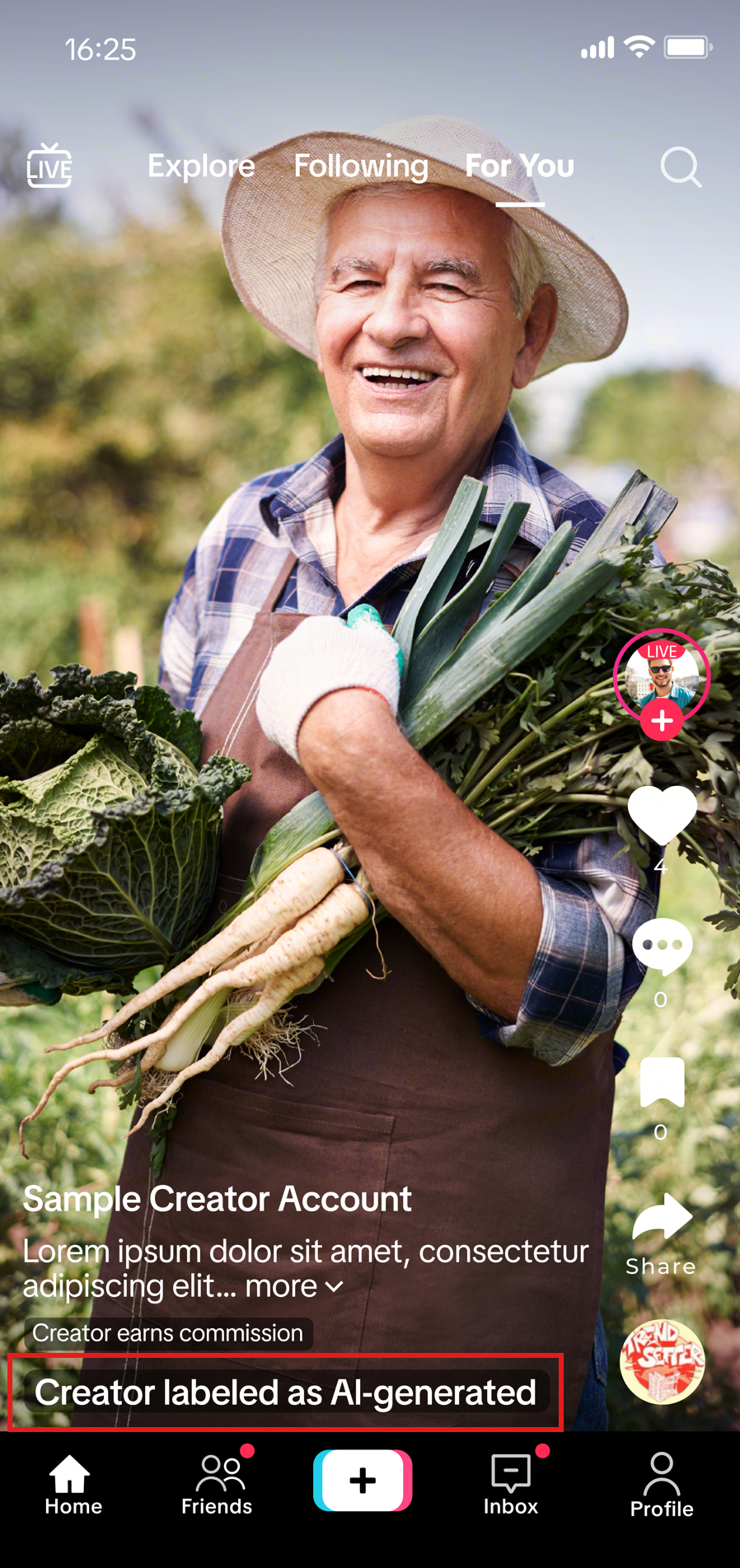
How to Turn On the “AI-Generated Content” Setting
Need help? Follow the step-by-step images below.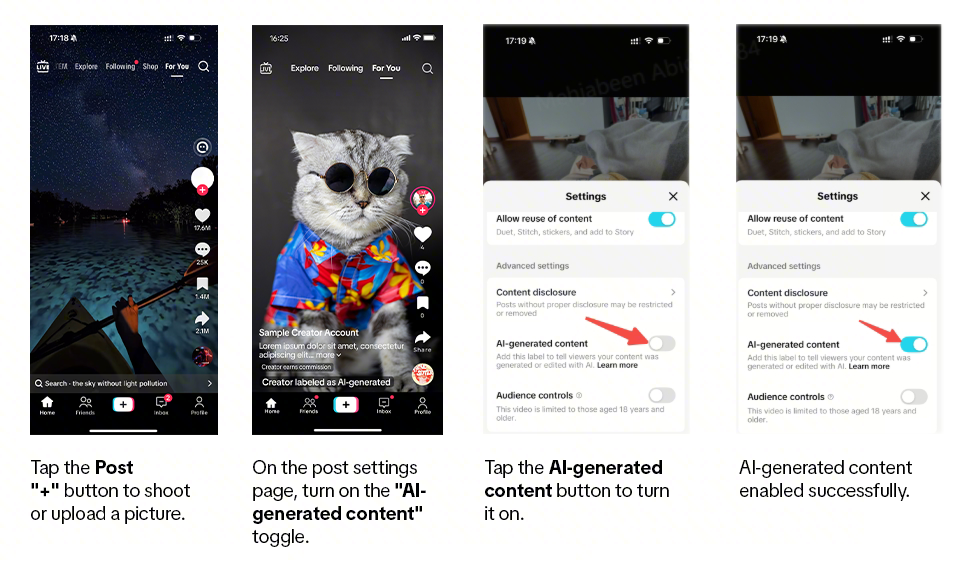
- Content created using official TikTok AI effects will be automatically labeled by the platform, and no manual action is required. If additional non-TikTok-official AI tools are used, creators must still comply with the disclosure requirements in this policy.
- Failing to disclose AI use when AI plays a significant role in content creation is a violation which may result in removal of products from content.
Platform-Initiated Disclosure
- To further enhance transparency, the platform may automatically identify and label certain AI-generated content. When AI-generated content contains specific technical metadata, an “AI-generated” label will be automatically applied.
- Once content is automatically labeled by the platform, creators cannot remove the label. Content that is auto-disclosed will not face additional penalties or distribution restrictions solely due to the label.
- Note: If a label is not automatically applied by the platform, and the content meets the disclosure scenarios outlined above, creators are still encouraged to voluntarily disclose AI use using the self-disclosure options.
🚫 What types of AIGC are not allowed?
While TikTok Shop allows the use of AIGC on its platform, the following types are prohibited in Livestreams and Short Videos/Photo Mode and may result in enforcement action:🚫 Non-Disclosure
❌ Any AI-generated content without clear disclosure. For example, content made with AIGC must clearly labelled as such (e.g., "AI generated content", "#AIGC"). Missing labels in livestreams, titles, or video descriptions may result in enforcement action.🚫 Impersonation and Misrepresentation
❌ Content that portrays any celebrity, medical professional, political, or public figure (including their voices) which is being used to promote a product, even if content is properly labeled as AIGC. ❌ Deepfakes: Doctored or manipulated videos of celebrities, medical professionals, political or public figures or where the face or body of a person is swapped with someone else's. Deepfakes are often used to create convincing but fake videos or photos and are strictly prohibited on TikTok Shop.❌ The use of digitally superimposed avatars that impersonate celebrities, public figures, or medical professionals for the purpose of product promotion is prohibited.
🚫Impersonating Doctors or Health Professionals
Don't use AI-generated avatars, voices, personas, presenters or hosts that impersonate, portray or falsely imply medical or professional expertise to promote products or medical claims. This includes healthcare professionals, wellness experts and individuals presented as authoritative experts. This includes:- Doctors, nurses, dentists, dermatologists, pharmacists, nutritionists, psychologists, therapists, and traditional medicine practitioners
- Any healthcare or wellness professional (e.g. fitness coaches, beauty specialists, wellness experts)
- Hosts, presenters, interviewers/interviewees, podcast guests, or self-proclaimed experts presented as qualified medical authorities
❌ A video where an AI beauty expert recommends a skincare product while claiming it treats eczema or other medical conditions.
❌ An AI-generated TV host interviews a virtual "health expert" who claims a product cures joint pain.
❌ An AI-generated nutritionist recommends a weight-loss supplement while presenting medical advice.
❌ An AI-generated spiritual or wellness guru promotes herbal products using unverified medical claims.
🚫Impersonating Celebrities,Political or Public figures
❌ Don't use AI-generated avatars, voices, or personas that impersonate any celebrities, political or public figures:For example:❌ A Live Stream where the host is selling shoes using a filter of Kanye Wests face❌ An AI video of Kim Kardashian saying "I take one of these capsules every morning"❌ A Short Video with manipulated images of Rihanna promoting perfume/fragrance🚫Impersonating Official Authorities
Don't use AI-generated avatars, voices, personas or manipulated content that impersonates official authorities or falsely suggests endorsement by government or law enforcement organisations.This includes:
- Police officers
- Soldiers or military personnel
- Customs officers
- Border Force officers
- Government officials
- Emergency responders
- Firefighters
- Judges
- Court officials
- Regulatory officers
- Prison officers
❌ An AI-generated police officer recommends buying a personal safety product.
❌ A virtual soldier promotes nutritional supplements while appearing to provide official advice.
❌ AI-generated customs officers claim imported products have been officially approved.
❌ An AI-generated government official appears to endorse a product.
❌ An AI-generated judge recommends purchasing a legal document template.
🚫 Fear-Based Health Imagery
AI-generated horror, shock, or fear-based imagery must not be used to pressure users into purchasing health or wellness products, or to mislead users about a product's efficacy.This includes graphic or exaggerated images of organs, bodily functions, or diseases that suggest serious health harm or dramatic results from using a product. AI must not be used to create emotional pressure, fear, or disgust to drive sales, nor to imply that a product can cure, heal, eliminate, treat, prevent, eradicate, or alleviate any disease or medical condition, or health condition.Non-compliant examples include:❌ AI-generated images of damaged, diseased, or decaying organs used to suggest health risks that a product claims to fix
❌ Shock imagery showing a gut full of 'waste', toxins, or parasites, followed by taking a supplement and an unrealistic or instantaneous expulsion of bodily waste
❌ Graphic or exaggerated internal body visuals implying detoxification, cleansing, or disease removal❌ Fear-based before-and-after imagery suggesting severe health consequences if the product is not used
❌ AI-generated animations that dramatise internal bodily processes to overstate product effectiveness or speed of action.
All content must present health and wellness products in a responsible, accurate, and non-misleading manner, reflecting realistic and supported outcomes only.| Violation 🚫 |
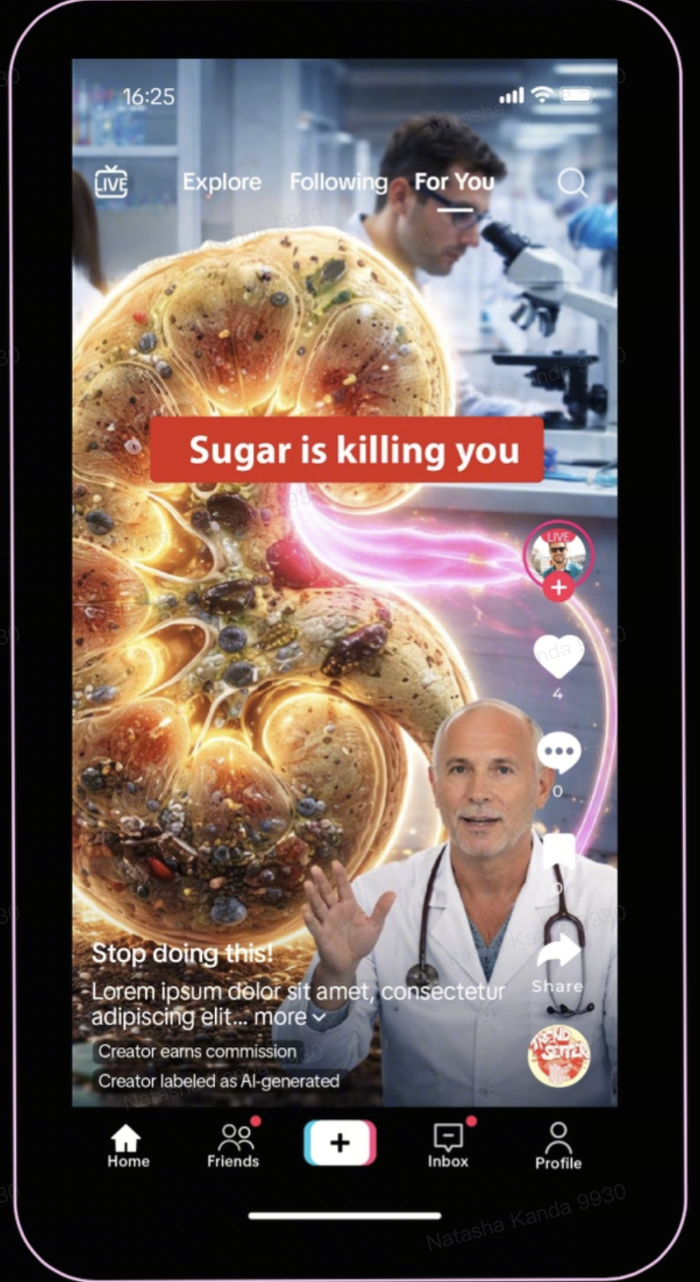 |
| Why it fails: the content uses AI to create fear-based visuals of damaged organs |
🚫 Exaggerating Product Functions or Efficacy
Do not use AI to fabricate, exaggerate, or misrepresent what a product can do. This includes making a product appear more powerful, effective, or higher-quality than it actually is.AI must not be used to demonstrate or imply that a product can cure, heal, eliminate, treat, prevent, eradicate, or alleviate any disease or medical condition, or health condition, even if no explicit text claim is made. Learn more about Misleading Claims here. Non-compliant examples include:❌ Impossible or unrealistic resultsAI-enhanced outcomes that cannot be achieved in real use, e.g. showing “instant cleaning” where a household sponge effortlessly removes burnt-on industrial grease from heavy factory machinery in a single wipe, despite being designed for light kitchen cleaning.❌ Manipulated visuals suggesting higher quality or performanceUsing AI to completely remove stains, scratches, or dirt after product use even though the product wouldn’t realistically achieve that level of cleanliness.❌ Distorted before-and-after imageryAI-altered before-and-after content that exaggerates results, e.g. a shampoo shown instantly promoting hair growth or filling in bald spots.❌ Exaggerated effectiveness claimsScenarios that overstate product capabilities, e.g. showing toothpaste eliminating cavities or immediately repairing teeth.❌ Unrealistic usage conditionsShowing a product functioning in environments or scenarios it is not designed for, e.g. a smartphone operating underwater when it is not waterproof.❌ Implied medicinal or therapeutic effectsUsing AI to show or imply medical outcomes, e.g. an AI-generated before-and-after image where a topical nail product instantly cures a fungal nail infection, with a visibly diseased “before” nail and a fully healthy “after” nail immediately after application.Your content must always accurately reflect real product performance.📍Click here to read more about Product Claims for Creators| Violation 🚫 | Violation 🚫 |
| Why it fails: the bath bomb turns into a plastic whale toy. This fabricates functionality & effects that the bath bomb can't actually deliver. | Why it fails: The plant instantly becomes lush and green within seconds. The product cannot deliver this transformation — the AI-fabricated effect misrepresents real-world performance. |
🚫 Promoting Inaccurate or Inconsistent Product Attributes
Don't use AI to:❌ Alter the attributes of a product, for example, make a product seem larger, or smaller, than it actually is or misrepresent the packaging of a product
❌ Invent features a product doesn’t have
❌ Turn flat (2D) products into 3D when they are only 2D❌ Animate static products in unrealistic ways.❌ Add effects like glowing, lighting, or special features that the real product does not have.❌ Present claims that differ from official product information
Shoppers must receive truthful and consistent details of your promoted product. Creators should only include real product information and always base AI output on real product images and seller materials: real price, real features, real dimensions, and where applicable, real accessories that may be included.Example 1: The product listing includes the truck’s dimensions, but the AI-generated imagery exaggerates the truck’s apparent size, creating a misleading impression of the actual product.Violation 🚫 | |
The product listing details: 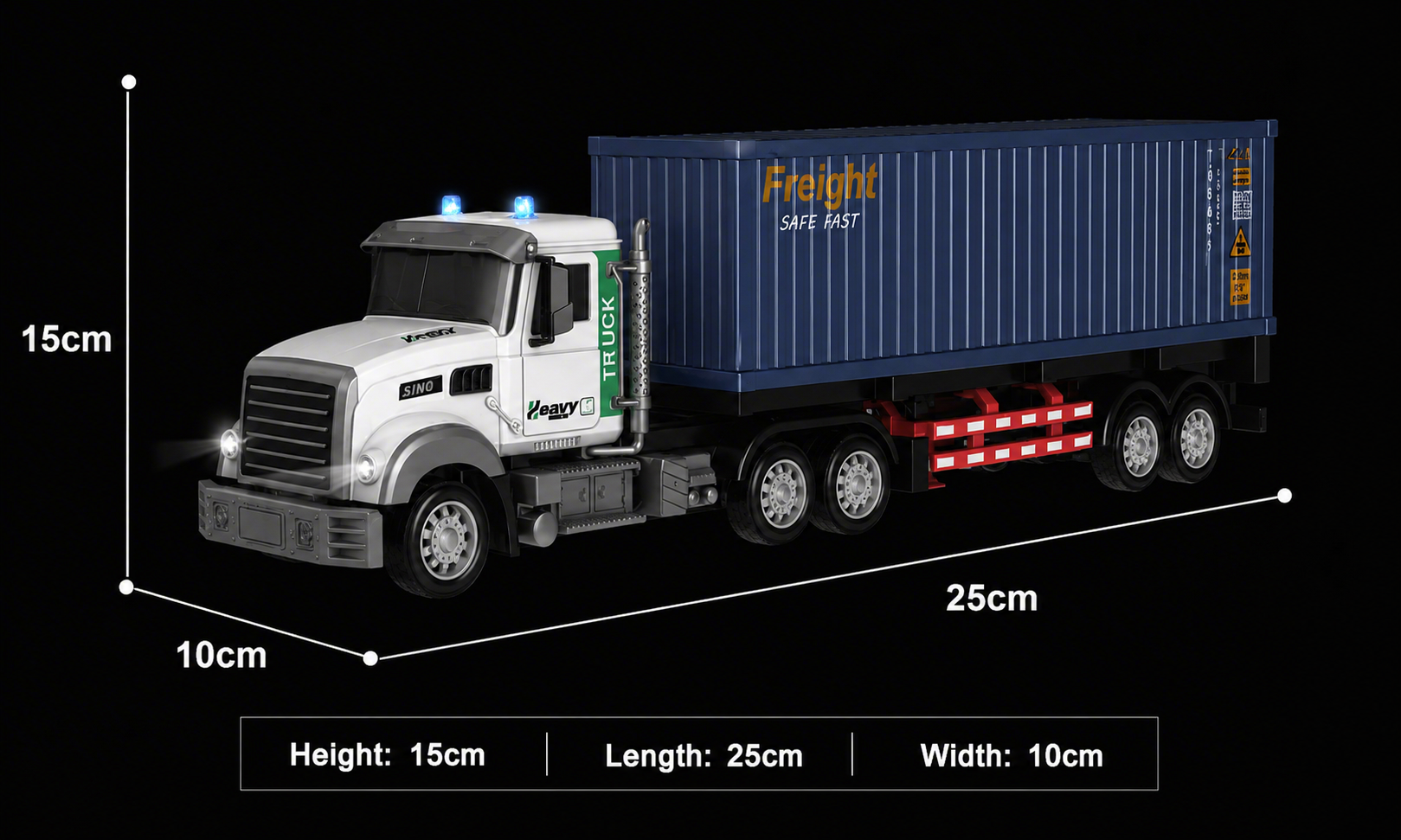 | The promotional content: |
Why it fails: the product's size in the content doesn't match the dimensions in the listing. | |
Violation 🚫 |
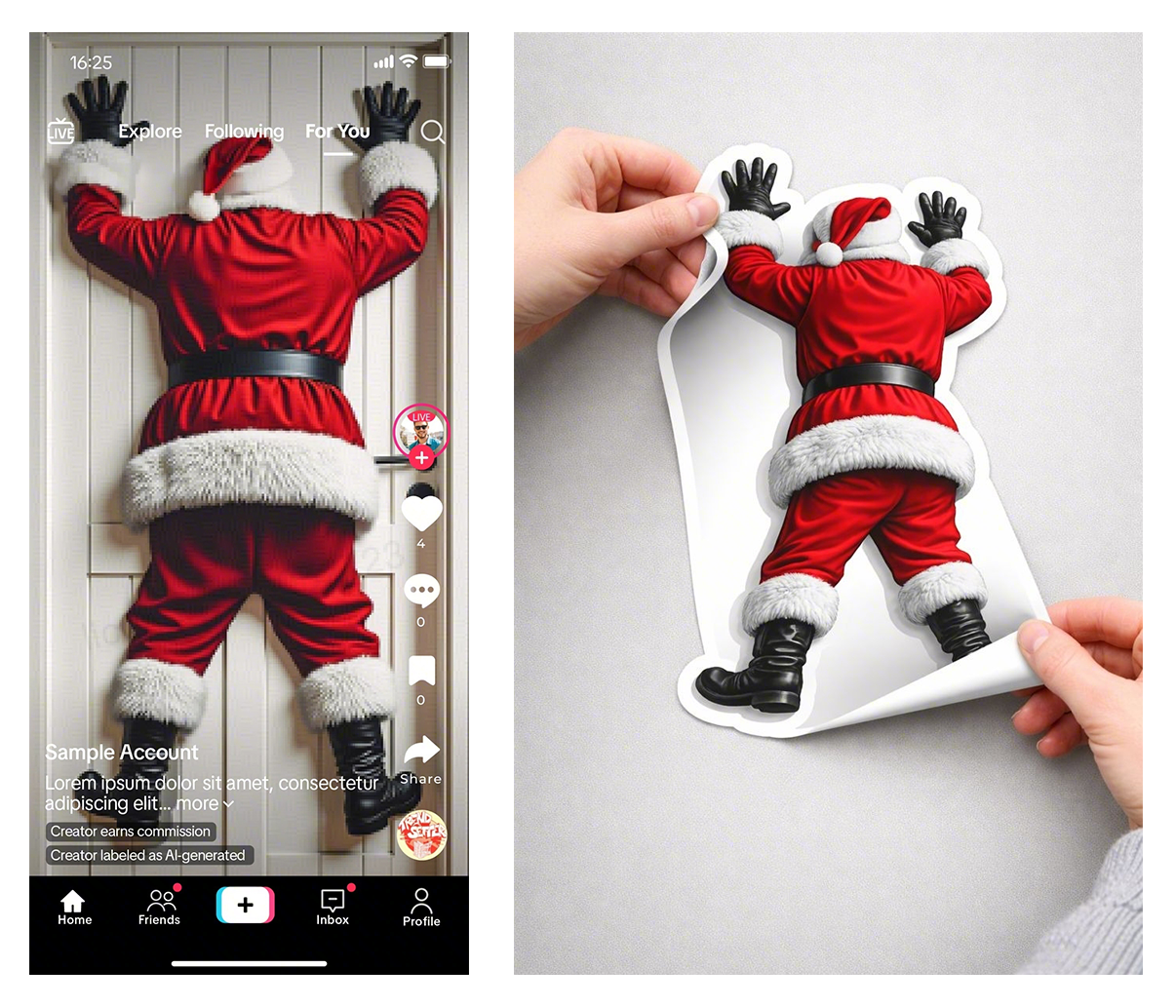 |
| Why it fails: the content uses air to misrepresent the size and final look of the product in real life. |
Violation 🚫 | |
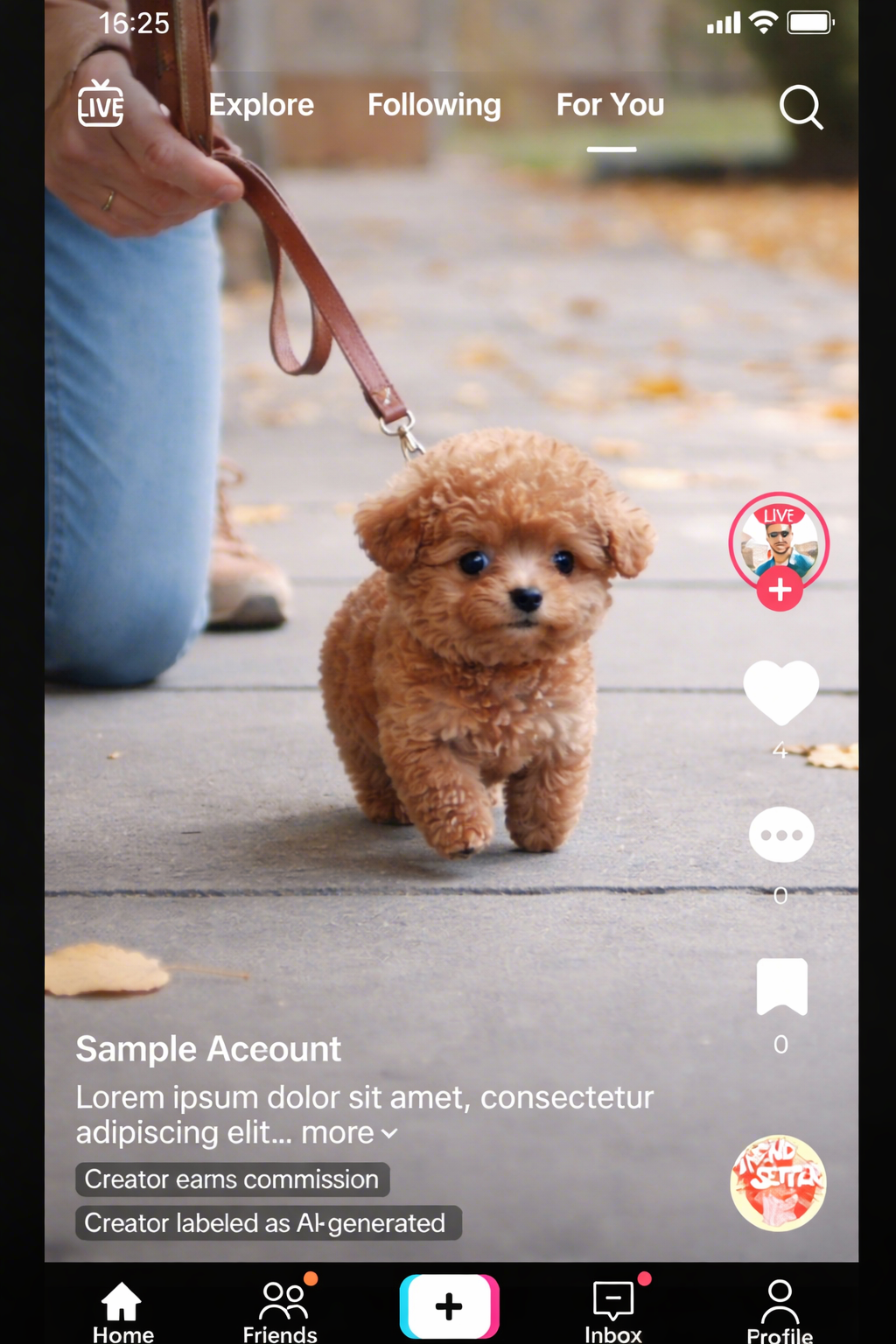 | 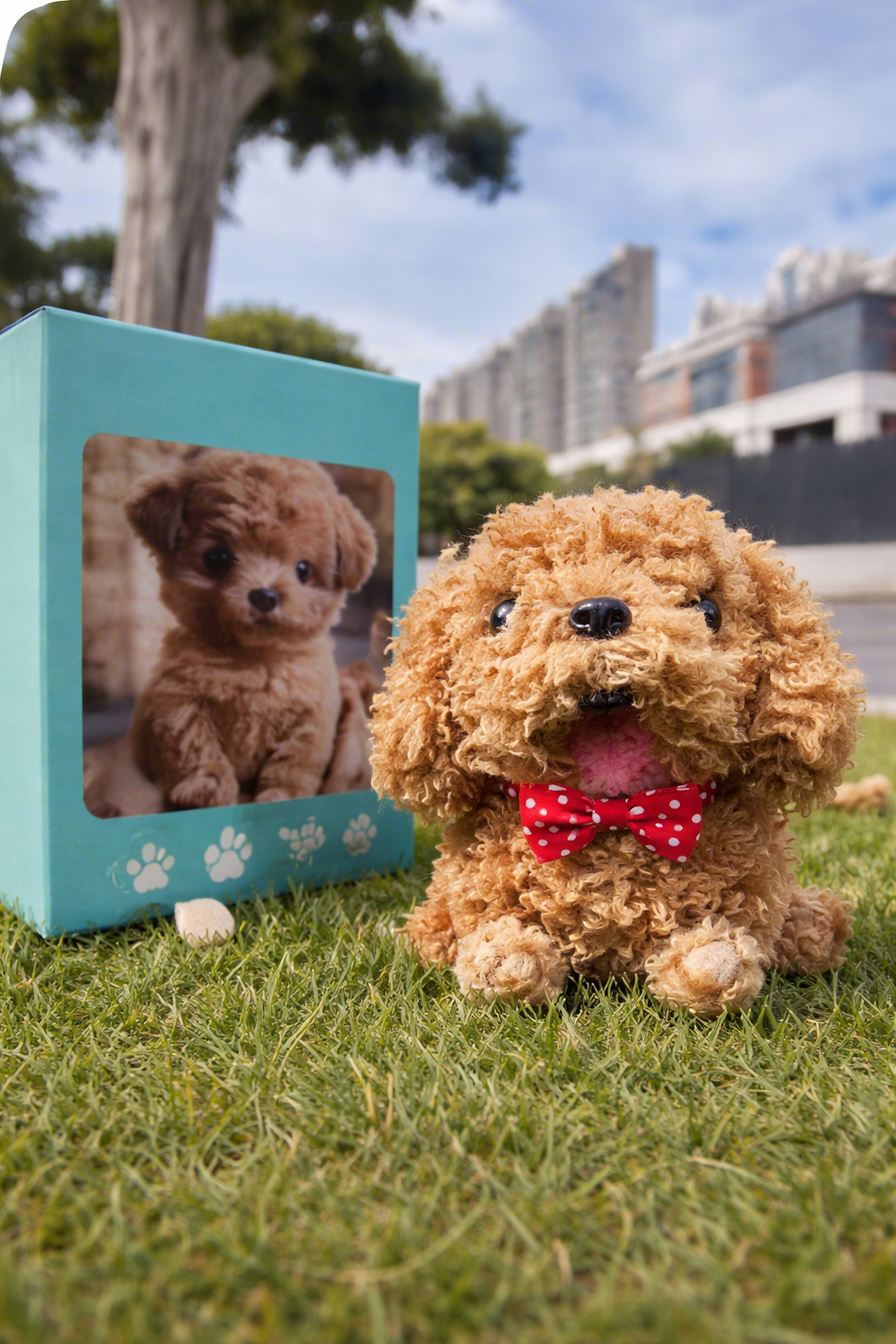 |
Why it fails: The content uses AI to misrepresent what the product actually looks like in real life. | |
🚫 Avoid Intellectual Property Risks
❌ Don't use AI to generate:- Unauthorised brand use in your content
- Unauthorised logo use in your content
- Misspelled logos or distorted brand image
High-Volume, Low-Quality AI Content
Creators must not use AI to mass-produce:❌ Multiple identical or near-identical videos
❌ Repetitive, low-effort promotional content
For example:❌ Uploading multiple promotional videos that reuse the same script, visuals, or structure with minimal changes❌ Excessive use of AI generated calls to action e.g. 'last minute deal' This negatively affects the shopper experience and undermines the authenticity and integrity of TikTok Shop.Content like this creates a poor shopping experience and reduces trust by making TikTok Shop feel inauthentic or spam-like.✅ What Good AI Generated Content Looks Like
Beyond staying compliant, top-performing AIGC videos share a few visual and content traits. Aim for these whenever you generate TikTok Shop content with AI:- Looks clean — no AI weirdness 👀
- Movements flow smoothly — no jump cuts, glitches or warps mid-scene.
- No extra fingers, melting faces or "blink and you'll catch it" defects.
- Physics check out — drinks stay in the cup, hands hold the product properly.
- Logos and on-pack text stay sharp, legible and undistorted.
- Feels real — not "obviously AI" 🎥
- People look like people — natural skin, eyes and expressions.
- Lip-sync lands on beat; voices feel human, not robotic.
- Fabric, folds and textures behave like real materials in real light.
- Backgrounds stay grounded — skip the surreal, dreamlike sets.
- Product is the main character 🛍️
- Clear product story: what it is, what it does, why shoppers care.
- Multi-angle shots with consistent details, colors and packaging.
- No fake drama or clickbait scenarios — keep claims true to the product.
- AI is the tool, the product is the star. Always.
✅Best Practices for Using AIGC
To use AIGC content safely and compliantly on TikTok Shop, follow these rules:✅ Disclose AI use (e.g., “AI generated content”, #aivideo, #aigenerated)whenever AI materially contributesto visuals, voice, avatars, or demonstrations, even if a human edits or narrates the content✅ Use the AI-generated content toggle when publishing✅ Clearlylabel AI-generated content in titles or descriptions✅ Avoid impersonating:
- Celebrities
- Medical professionals
- Political figures
- Public figures
- Other creators
- Official authorities (e.g. police officers, soldiers, customs officers, judges and government officials)
What happens if I receive a violation for AIGC?
The platform may take appropriate enforcement actions against AI-generated content and related accounts that violate the standards outlined above. Enforcement measures will vary depending on the nature, severity, frequency, and impact of the violation. Actions may include temporary posting limits (for example, restricting an account to 15 videos within a 30-day period), traffic restrictions, and in cases of repeated violations or significant negative impact, suspension of the account, removal of e-commerce permissions or withholding the creators' commission.Important Note: Content will not be demoted or restricted solely because the AI-generated content setting is enabled, provided it complies with platform rules, including the TikTok Community Guidelines.If you believe the violation you received was issued in error, you can appeal through the violation message.Learn more about learn how to submit an appeal here.